
By Noor & Nikaah Editorial Team
Marriage is one of the most meaningful relationships in human life. It brings two individuals together, creating a bond built on companionship, trust, affection and shared responsibilities.
In Islam, marriage (Nikah) is more than a social tradition or a legal arrangement. It is a significant commitment through which two people seek companionship, protect one another’s dignity and build a life guided by faith.
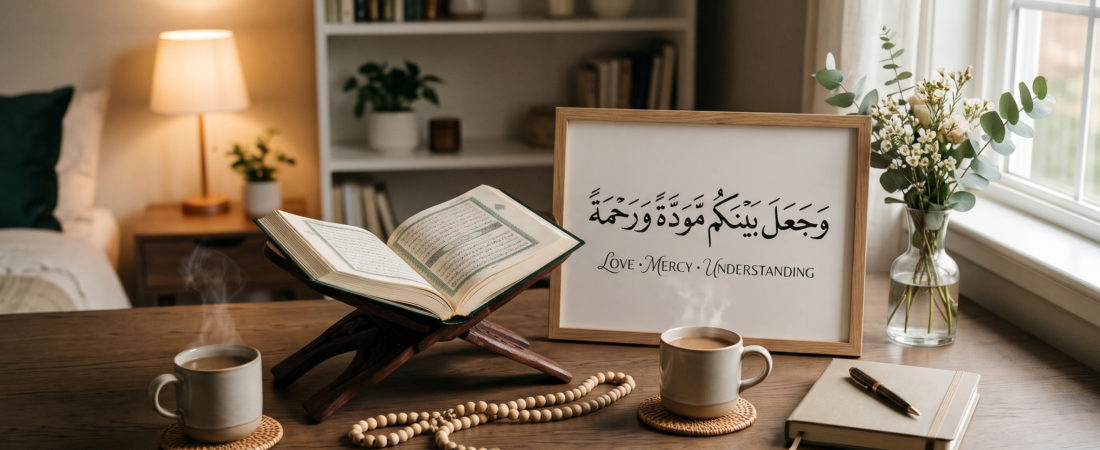
The Qur’an beautifully describes the relationship between husband and wife through three important concepts: tranquillity (Sakinah), affection (Mawaddah) and mercy (Rahmah).
But what does it really mean to build a marriage around these values? And how can Muslim couples apply Islamic teachings to their everyday lives?
Let’s explore the foundations of a healthy and meaningful marriage in Islam.
1. Marriage in the Eyes of Islam
Islam recognises marriage as a meaningful institution that provides companionship, emotional security and a lawful foundation for family life.
Marriage is not simply about fulfilling social expectations. It involves accepting responsibilities, respecting one another and making a sincere effort to build a peaceful household.
Allah says in the Qur’an:
“And among His signs is that He created for you spouses from among yourselves so that you may find tranquillity in them. And He placed between you affection and mercy.”
Surah Ar-Rum (30:21)
This verse highlights three beautiful dimensions of marriage:
- Sakinah (Tranquillity): Finding peace, comfort and emotional security with your spouse.
- Mawaddah (Affection): Expressing love, warmth and care through words and actions.
- Rahmah (Mercy): Showing patience, understanding, forgiveness and compassion.
These values remind us that a successful marriage is not measured only by financial stability, social status or outward appearances. The emotional and spiritual environment between spouses matters deeply.
2. Love and Mercy: The Foundation of a Strong Marriage
Love is important in marriage, but Islam also emphasises mercy.
Feelings of affection may naturally change with circumstances. Couples experience happiness, disagreements, financial pressures, family responsibilities and difficult periods.
During such moments, mercy becomes especially important.
Mercy means treating your spouse with consideration even when you disagree. It means choosing respectful communication instead of hurtful words and understanding instead of unnecessary criticism.
The Prophet Muhammad ﷺ taught:
“Let not a believing man hate a believing woman. If he dislikes one of her characteristics, he will be pleased with another.”
Sahih Muslim, 1468b
This Hadith encourages spouses to recognise one another’s positive qualities rather than allowing individual shortcomings to define the entire relationship.
Nobody is perfect. Both husband and wife have strengths, weaknesses, habits and imperfections.
A healthy marriage requires recognising this reality and treating one another with fairness.
3. Husband and Wife: Partners With Responsibilities
Islam places responsibilities upon both husband and wife.
Marriage should not become a relationship where one person constantly demands while the other is expected to sacrifice everything.
Instead, both spouses should understand their responsibilities and respect the rights of the other.
Allah says:
“And live with them in kindness.”
Surah An-Nisa (4:19)
This command establishes kindness as an important principle in marital life.
For a husband, this includes treating his wife with dignity, fulfilling her rights, providing financial maintenance as required by Islamic teachings and avoiding injustice.
For a wife, this includes fulfilling her marital responsibilities, respecting her husband and contributing positively to their shared household.
Both spouses should remember that their responsibilities are not an excuse to neglect the rights, dignity or wellbeing of the other.
Marriage is a relationship of mutual consideration, not a competition over who has greater authority.
4. Understanding, Communication and Respect
One of the common challenges in marriage is misunderstanding.
Sometimes, a disagreement begins because one spouse expects the other to understand something that has never been communicated.
Other times, small concerns remain unspoken until they become major sources of frustration.
Healthy communication helps prevent these situations.
Here are some practical habits couples can develop:
Listen without immediately reacting.
Allow your spouse to explain their feelings. Listening is not always about agreeing; sometimes it is simply about understanding.
Discuss problems respectfully.
Avoid insults, humiliation, threats and deliberately hurtful remarks during disagreements.
Express appreciation.
A simple thank-you, a kind message or acknowledging your spouse’s efforts can make a meaningful difference.
Discuss important decisions together.
Financial planning, family matters, future goals and household responsibilities should be approached with consideration for both spouses.
Learn to apologise.
Acknowledging a mistake is not a sign of weakness. It is an opportunity to rebuild trust.
Remember that communication is not about winning an argument. It is about finding a way forward together.
5. Emotional and Physical Intimacy in Marriage
Intimacy is an important part of married life.
Islam recognises the lawful physical relationship between husband and wife while also emphasising dignity, privacy and consideration.
However, intimacy should not be understood only in physical terms.
Emotional intimacy is equally important. Feeling appreciated, respected, safe and understood creates a stronger connection between spouses.
The Qur’an describes husband and wife using a beautiful metaphor:
“They are clothing for you and you are clothing for them.”
Surah Al-Baqarah (2:187)
Clothing provides closeness, protection and covering. This description offers a meaningful way to reflect upon the companionship between spouses.
In everyday married life, couples can strengthen intimacy by:
- Making time for one another without unnecessary distractions.
- Discussing emotional needs openly.
- Respecting personal boundaries and comfort.
- Maintaining privacy regarding their intimate relationship.
- Showing affection through appropriate words and actions.
- Approaching physical intimacy with mutual consideration and kindness.
A healthy intimate relationship should never be built upon pressure, humiliation or disregard for the other person’s wellbeing.
Both spouses deserve dignity, consideration and respect.
6. Building a Marriage Around Faith
A marriage becomes more meaningful when both spouses encourage one another towards goodness.
Faith can provide a shared foundation during both comfortable and difficult periods.
Couples can develop simple habits that strengthen their spiritual connection:
- Encourage one another to maintain the five daily prayers.
- Read and reflect upon the Qur’an together.
- Make dua for one another.
- Practise gratitude for the blessings in their household.
- Seek forgiveness and avoid unnecessary resentment.
- Support each other’s efforts to become better Muslims.
These practices do not require an elaborate routine. Consistency in small acts of goodness can help create a positive spiritual environment at home.
A Muslim marriage should be a source of encouragement towards righteousness, not a reason for either spouse to move away from their faith.
7. Small Habits That Help Strengthen a Marriage
A strong relationship is built through everyday actions, not just special occasions.
Here are seven practical habits that Muslim couples can introduce into their daily lives:
- Spend quality time together: Make room for meaningful conversations, even during busy days.
- Express appreciation: Never assume your spouse automatically knows how much you value them.
- Protect each other’s privacy: Do not casually share personal marital matters with others.
- Be financially responsible: Discuss household expenses, savings and financial expectations honestly.
- Avoid unnecessary comparisons: Every marriage has its own circumstances and challenges.
- Resolve disagreements constructively: Do not allow temporary anger to damage long-term trust.
- Make dua for your marriage: Ask Allah to place love, mercy and blessings in your relationship.
These habits may appear simple, but practising them consistently can help couples develop a healthier relationship.
8. A Beautiful Dua for a Blessed Marriage
The Qur’an teaches believers to make a beautiful supplication for their spouses and families.
“Our Lord, grant us from among our spouses and offspring comfort to our eyes and make us an example for the righteous.”
Surah Al-Furqan (25:74)
This dua reminds us that a successful family is not simply one that enjoys worldly comfort. It is one in which family members become a source of happiness, goodness and encouragement towards faith.
Muslim couples can include this supplication in their daily duas, asking Allah to bless their marriage and guide their family towards righteousness.
Conclusion: A Marriage Built on Faith, Love and Mercy
A meaningful marriage is not one without disagreements, difficulties or imperfections.
It is one in which two people continue making sincere efforts to understand, respect and support each other.
Islam provides beautiful guidance for building this relationship through tranquillity, affection, mercy, kindness and responsibility.
Remember that marriage is not just about finding the right person. It is also about becoming a considerate spouse and creating an environment where both individuals can grow together.
May Allah place love, mercy, understanding and barakah in every Muslim marriage. Ameen.
Noor & Nikaah is dedicated to helping Muslim couples build stronger marriages through Islamic values, meaningful education and practical relationship guidance.
Disclaimer: This article provides general Islamic educational information. It is not a substitute for qualified religious guidance on individual marital rulings or professional counselling where needed.